
.jpg)
High Court Upholds Sambhal Jama Masjid Survey: National Implications
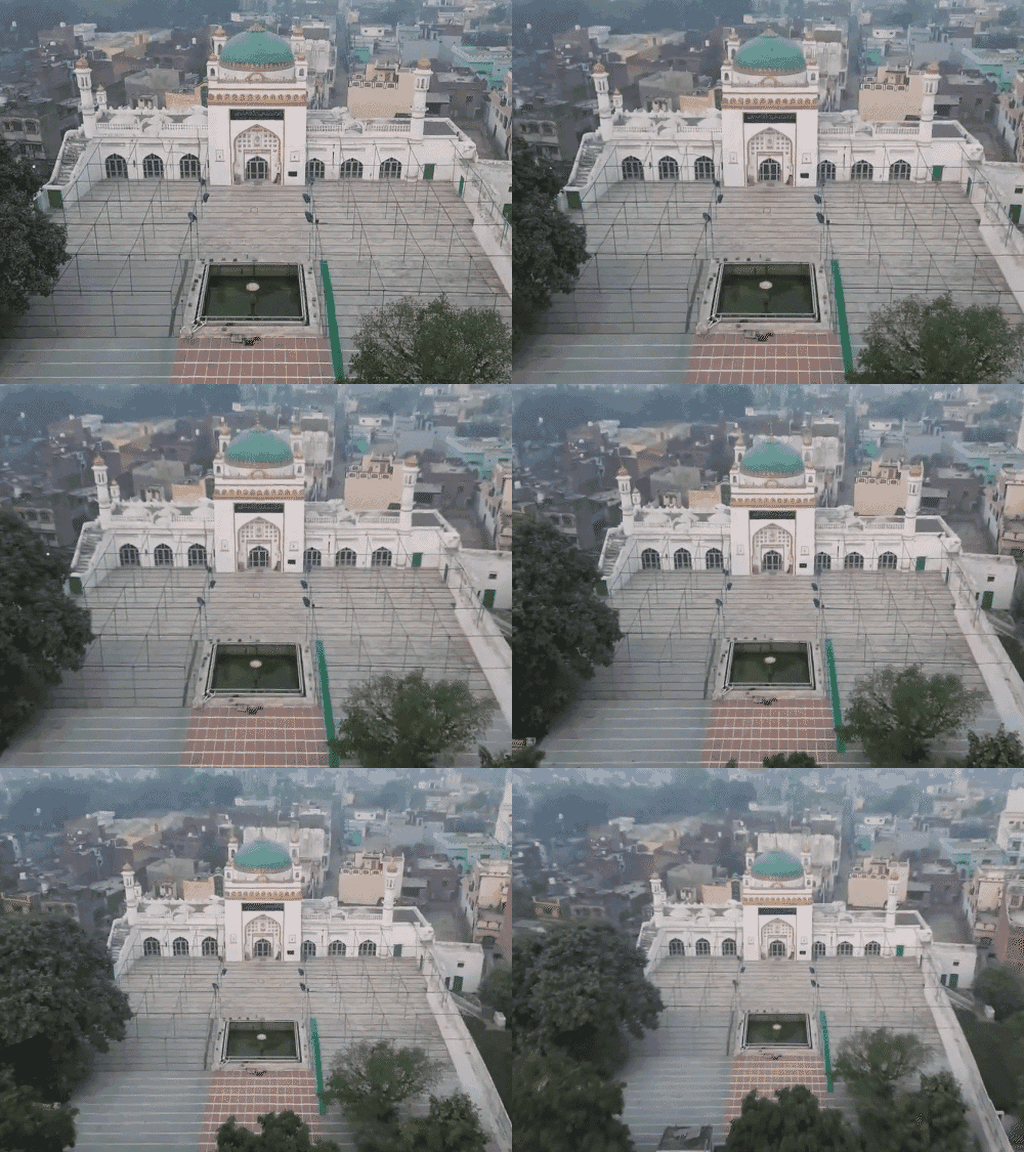
Summary: The Allahabad High Court upheld the ASI survey of the Sambhal Jama Masjid, rejecting a plea to halt it. The court deemed the Hindu party's case worthy of hearing, stating that all previous actions were valid. The decision follows violence during the initial survey and has significant national implications for similar cases, emphasizing the need for a balanced approach to religious disputes.
- High Court supports Sambhal Jama Masjid survey.
- Court rejects plea to halt ASI investigation.
- Decision affirms legality of survey proceedings.
- National implications for similar religious disputes.
- Legal battle continues in lower court.
According to HeadlinesNows report, the Allahabad High Court has rejected a plea to halt the ongoing survey of the Jama Masjid in Sambhal, Uttar Pradesh.
The court's decision, delivered on Monday by Justice Rohit Ranjan Agarwal, affirms the legality of the survey initiated by the Archaeological Survey of India (ASI).
The court dismissed the civil revision petition filed by the mosque committee seeking to stop the survey, stating that the Hindu party's case is worthy of hearing.
The incident follows violence that erupted on November 24th, 2024, during the initial ASI survey at the mosque.
The court's ruling explicitly states that all actions taken thus far in the matter are valid and that it will not interfere with the court commissioner's survey.
The legal proceedings, including the central question of whether the structure is a mosque or a temple, will continue in the Sambhal lower court.
This decision has significant national implications regarding religious sites and legal processes.
The legal battle over the Sambhal Jama Masjid exemplifies the complex interplay between religious sentiments, historical claims, and legal processes in India.
The High Court's decision emphasizes due process and the right to legal recourse for all parties involved.
This landmark judgment will undoubtedly set a precedent for similar cases across the nation, further highlighting the need for sensitive and careful handling of such matters.
The legal arguments presented by both parties revolved around historical evidence and the interpretation of existing laws related to religious structures.
The case underscores the need for a balanced and respectful approach to addressing historical and religious disputes within the legal framework.
The ongoing legal proceedings in Sambhal will continue to be closely watched by the nation.
The case highlights the significant legal challenges and complexities surrounding the survey of historical religious structures in India and the importance of judicial oversight in such sensitive matters.
The High Court's upholding of the survey is expected to have far-reaching consequences and will be analyzed by legal experts and historians nationwide.
The outcome will likely influence future surveys and legal proceedings regarding disputed religious sites.
This decision, while controversial, ultimately underscores the importance of the judicial process in resolving sensitive religious and historical disputes.
The court's decision to uphold the survey is a testament to the rule of law and the process of legal due diligence.
Related: Sports Updates | National News
Source: Dainik Bhaskar
