
.jpg)
Supreme Court to Hear Waqf Act Challenge: 5 Petitioners Submit Affidavits
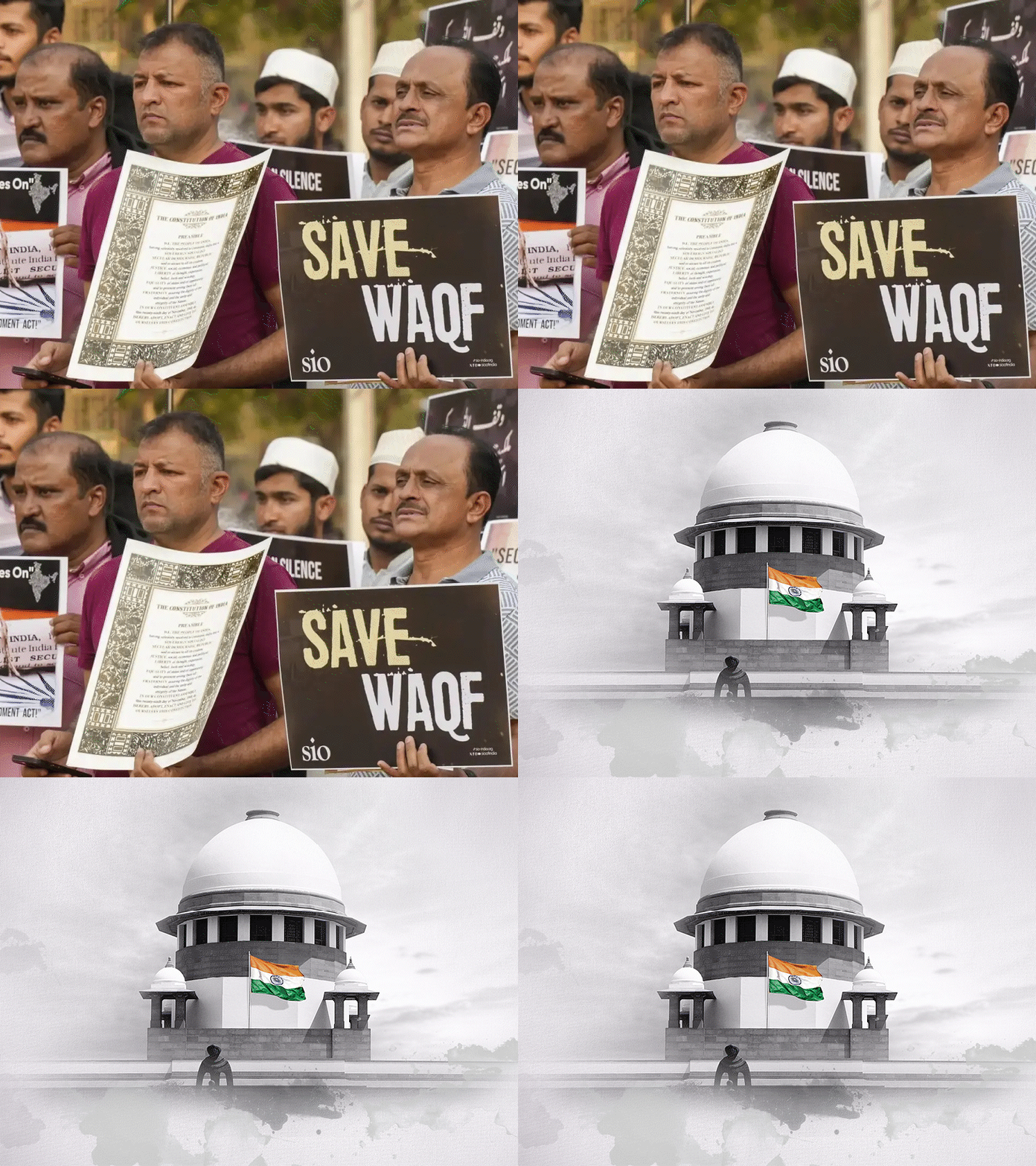
Summary: The Supreme Court of India will hear petitions against the new Waqf Act on May 20th. Five key petitioners will submit affidavits today. The All India Muslim Personal Law Board has restarted nationwide protests. The court's decision will impact Waqf property management and religious freedom in India.
- Supreme Court to hear crucial Waqf Act challenge on May 20th.
- Five key petitioners submit affidavits ahead of the hearing.
- All India Muslim Personal Law Board resumes nationwide protests.
- The case highlights tensions between government regulation and religious autonomy.
- The court's decision will have significant implications for Waqf property management and religious freedom.
According to HeadlinesNows report, the Supreme Court of India will hear petitions challenging the new Waqf Act on May 20th.
Before the hearing, five key petitioners will submit their affidavits today.
The Chief Justice of India (CJI) B.
R.
Gavai and Justice A.
G.
Massiah previously dismissed new petitions filed on May 15th, stating the court would only consider interim relief.
This pivotal legal battle centers on the constitutionality and implications of the amended Waqf Act, a matter of significant concern for Muslim communities nationwide.
The All India Muslim Personal Law Board (AIMPLB) has reignited nationwide protests against the Act, citing concerns about the potential impact on the administration and autonomy of Waqf properties.
Their 'Waqf Bachao' campaign, previously suspended, has resumed.
Over 70 petitions have been filed against the new Waqf Act, but the court will primarily focus on five core petitions, including one filed by AIMIM MP Asaduddin Owaisi.
The government's response and the court's ultimate decision will have far-reaching consequences for the management of Waqf properties and the rights of Muslim communities across India.
The Supreme Court's judgment will set a precedent for religious freedom and the legal framework governing Waqf boards.
The case highlights the ongoing tensions between government regulation and religious autonomy, and the judiciary's role in balancing these competing interests.
This significant legal challenge underscores the national debate surrounding the Waqf Act and its potential impact on religious communities.
The outcome will have profound implications for the future of Waqf properties across the nation, and the government's role in their administration.
Keywords: Waqf Act, Supreme Court, Muslim Personal Law Board, Asaduddin Owaisi, legal challenge, India, religious freedom.
Related: Shivpuri News | Madhya Pradesh News
Source: Dainik Bhaskar
