
.jpg)
Tharoor Leads National Delegation: Congress Denies Nomination Amidst Controversy
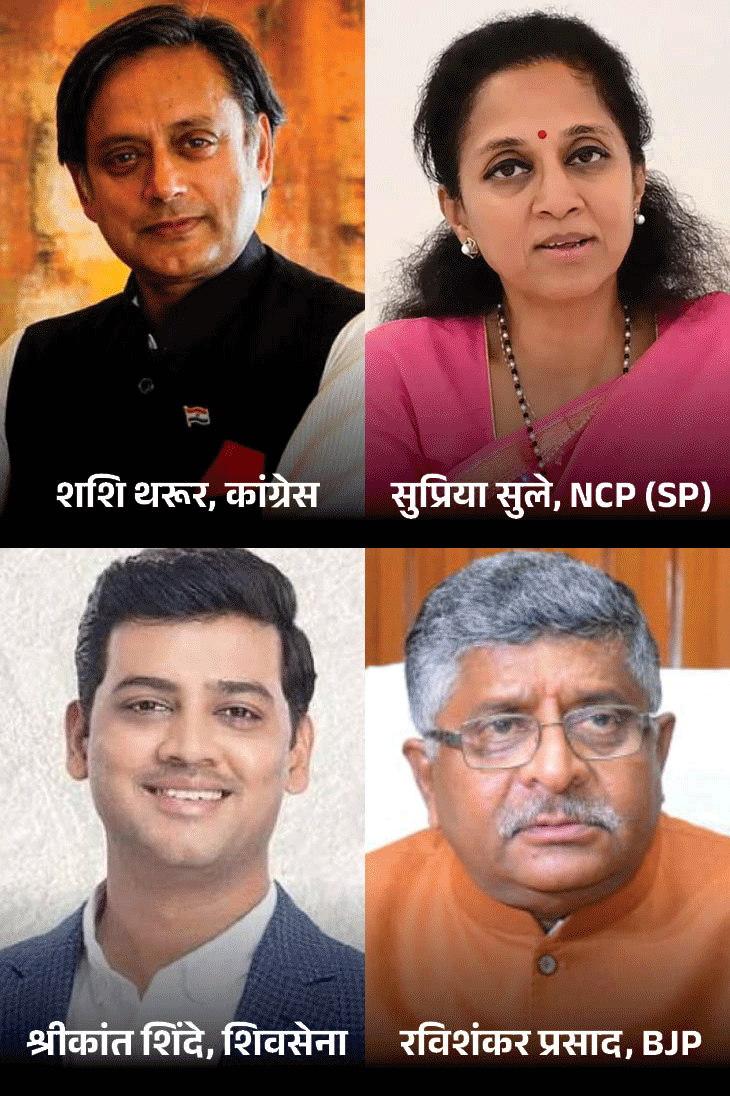
Summary: A major controversy has erupted after the Indian government appointed Shashi Tharoor to lead a national delegation explaining Operation Sindoor to the UNSC, despite the Congress party denying any involvement in his nomination. This highlights the ongoing political tensions and challenges in maintaining a united front on national security issues. The seven-member delegation will travel to several countries to explain India's stance on counter-terrorism and related matters. The situation showcases the complexities of India's political landscape and the ongoing friction between the ruling party and the opposition. The diplomatic initiative aims to improve understanding of Indias position on cross-border terrorism.
- Congress denies nominating Shashi Tharoor for the national delegation.
- Tharoor leads a key delegation explaining 'Operation Sindoor' to global powers.
- Controversy sparks debate over transparency and political maneuvering.
- Seven delegations will visit major countries to explain India's counter-terrorism stance.
- The situation exemplifies complexities within India's political landscape.
According to HeadlinesNows report, a significant controversy has erupted concerning the inclusion of Congress MP Shashi Tharoor as the head of one of seven Indian delegations tasked with explaining 'Operation Sindoor' and India's stance on cross-border terrorism to key global nations, particularly UNSC members.
The Parliamentary Affairs Ministry announced the delegation leaders on Saturday, naming Tharoor alongside BJP's Ravi Shankar Prasad and Baijayant Panda, JDU's Sanjay Kumar Jha, DMK's Kanimozhi Karunanidhi, NCP (SP)'s Supriya Sule, and Shiv Sena (Shinde faction)'s Shrikant Shinde.
However, the Congress party swiftly denied nominating Tharoor, claiming the government unilaterally appointed him.
Congress leader Jairam Ramesh took to X (formerly Twitter) to express the party's surprise at Tharoor's inclusion.
This move has ignited a political firestorm, with the opposition questioning the government's motives and the selection process.
The delegations, comprising parliamentarians from various parties, will embark on a crucial diplomatic mission to enhance international understanding of India's counter-terrorism strategy and its engagement with the UNSC.
The controversy underscores the delicate balance between inter-party cooperation and political maneuvering on the national stage.
The government's decision to include Tharoor, despite the Congress's denial, has raised eyebrows and sparked intense debate regarding transparency and procedural fairness.
This situation will undoubtedly be closely followed by political analysts and the public alike.
The seven delegations will visit major countries, aiming to present a united front on this crucial national security issue.
This delegation highlights India's commitment to global partnerships and its proactive approach to counter-terrorism efforts.
The impact of this diplomatic initiative on international relations remains to be seen.
The controversy surrounding Tharoor's appointment casts a shadow over the government's attempts at showcasing national unity on such a sensitive topic.
The matter will likely continue to be debated intensely in the coming days.
The unfolding events further emphasize the intricate complexities of India's political landscape.
Related: Madhya Pradesh News | Shivpuri News
Source: Dainik Bhaskar
